 |
Please Enter IMEI Number:
|
Home / IMEI Checker / 358812061343766 Nokia E70
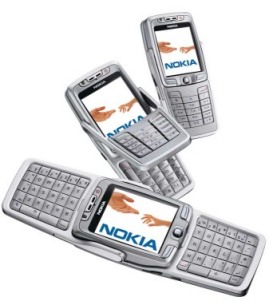
This is on-line service for checking and verification of IMEI numbers of Nokia E70 mobile phones, PDAs and other electronic devices. Each Nokia mobile cell phone, PDA or a device with a built-in GSM chipset has a unique 15 digit IMEI number. Based on this number, it is possilbe to check some information about the device, for instance brand and model, supported bands, operating system and special features.
|
|
||||||||||||||||||||||||

| Brand: | Nokia Browse Nokia devices |
| Manufacturer: | Nokia Browse all devices manufactured by Nokia |
| Hardware Designer: | Nokia |
| OEM ID: | RM-10 |
| Release Date: | May, 2006 |
Physical Attributes |
|
| Dimensions (width x height x depth): |
53 x 117 x 22 millimetres 2.1 x 4.6 x 0.9 inches |
| Bounding Volume: | 136.4 cubecentimetres |
| Mass: | 127 grams (battery included) |
Software Environment |
|
| Embedded Operating System: | Symbian OS 9.1 Series 60 3rd Edition Browse devices running this OS |
| Kernel: | Symbian 9.1 |
Microprocessor, Chipset |
|
| CPU Clock: | 220 MHz |
| CPU: | Texas Instruments OMAP 1710 Browse devices based on OMAP 1710 |
| Width of Machine Word: | 32 bit |
| CPU Core: | ARM926TEJ |
| Level 1 cache: | 16KiB data cache / 32 KiB instruction cache |
| Instruction Set: | ARMv5TEJ |
Memory, Storage capacity |
|
| RAM type: | SDRAM |
| RAM capacity: | 64 MiB, 48MiB accessible |
| ROM type: | Flash EEPROM |
| ROM capacity: | 128 MiB, including 64MiB user-accessible non-volatile storage |
Graphical subsystem |
|
| Display Type: | color transflective TFT display |
| Display Color Depth: | 24 bit/pixel (16777216 scales) |
| Display Diagonal: | 2.1 " (54.5 millimetres) |
| Display Resolution: | 352 x 416 (146432 pixels) |
| Viewable Display Size: | 1.39 " x 1.64 " (35.2 x 41.6 millimetres) |
| Pixel density (dot pitch): | 254 pixel/inch (0.10001 millimetre/pixel) |
Audio Subsystem |
|
| Audio Channel(s): | stereo sound |
| Digital/Analog Converter (Playing): |
16 bit resolution 44100 Hz holding frequency |
| Microphone(s): | mono sound |
| Loudspeaker(s): | mono sound |
| Audio Output: | Proprietary plug |
Cellular Phone |
|
| Cellular Networks: | GSM900, GSM1800, GSM1900, UMTS2100 (B1) |
| Cellular Data Links: | CSD, HSCSD, GPRS, EDGE, UMTS |
| Cellular Antenna: | Internal antenna |
| Call Alert: | 48 -chord melody (polyphonic) |
| Vibrating Alert: | Supported |
| Speakerphone : | Supported |
| Phone Controller: | TI TMS320C55x |
| SAR: | 1.01 W/kg |
Control Peripherals |
|
| Positioning Device: | Not supported |
| Primary Keyboard: | Open-out QWERTY-type keyboard, 80 keys Automatic keyboard backlight (upon press of any key) |
| Directional Pad: | Four-way (with action button) |
| Scroll Wheel: | Not supported |
Interfaces |
|
| Expansion Interfaces: | miniSD Supports memory cards with capacity of up to 2GB and may complies with some (not SD 2.0/HC) memory cards with higher capacity than 2GB |
| USB: | USB 2.0 client, Full-Speed (12Mbit/s) Proprietary connector |
| Bluetooth (802.15): | Bluetooth 1.2, Internal antenna |
| Wireless LAN/Wi-Fi (802.11): | IEEE 802.11e, IEEE 802.11i, IEEE 802.11g, 54 Mbit/s Internal antenna |
| Infrared Gate: | IrDA 1.2, 115200bit/s (SIR/CIR) |
Multimedia Broadcast |
|
| Analog Radio: | Not supported |
| Digital Media Broadcast: | Not supported |
Power Supply |
|
| Battery Technology: | Lithium-ion battery |
| Battery Layout: | removable |
| Estimated Battery Life: | 12 hours |
| Battery Capacity: | 1150 mAh |
| Estimated Average Current: | 96 mA |
Additional Details |
|
| Additional Features: |
|
| Related Page: | http://europe.nokia.com/phones/e70 |
| Datasheet State: | Final specifications |
| Datasheet Views: | 16776 times |
| Datasheet Added: | Nov 21, 07 23:04:04 |
- What is IMEI? The IMEI [International Mobile Equipment Identity] is a unique number to identify GSM, WCDMA, and iDEN mobile phones, as well as some satellite phones.
- What is PDA? The PDA [Personal Digital Assistant] is a small tablet computer which functions as a personal organizer, but provides Internet access, email and messanger.
- What is GSM? The GSM [Global System for Mobile communication] is a digital mobile telephony system that is used in Europe and Asia. GSM uses a variation of time division multiple access (TDMA) and is the most widely used of the three digital wireless telephony technologies (TDMA, GSM, and CDMA).
- What is ESN number? An ESN number is an Electronic Serial Number which is used to identify a specific CDMA cell phone. A CDMA cell phone generally does not use a SIM card to to identify and authenticate subscribers to the network.


this|
this|
this|
this|
this|
this|
this|
this|
this|
this|
this|
this|
this|
this|
this|
this|
this|
this|
this|
this|
this|
this|
this|
this|
this|

© 2024 GSMChecker.com is a free IMEI check tool that helps to identify any GSM-enabled device.
Reverse Phone Lookup | IMEI Check | Receive SMS Online | Phone Database | Background Check | Contact us | Terms | Sitemap
© 2024 GSMChecker.com is a free IMEI check tool that helps to identify any GSM-enabled device.
Reverse Phone Lookup | IMEI Check | Receive SMS Online | Phone Database | Background Check | Contact us | Terms | Sitemap